
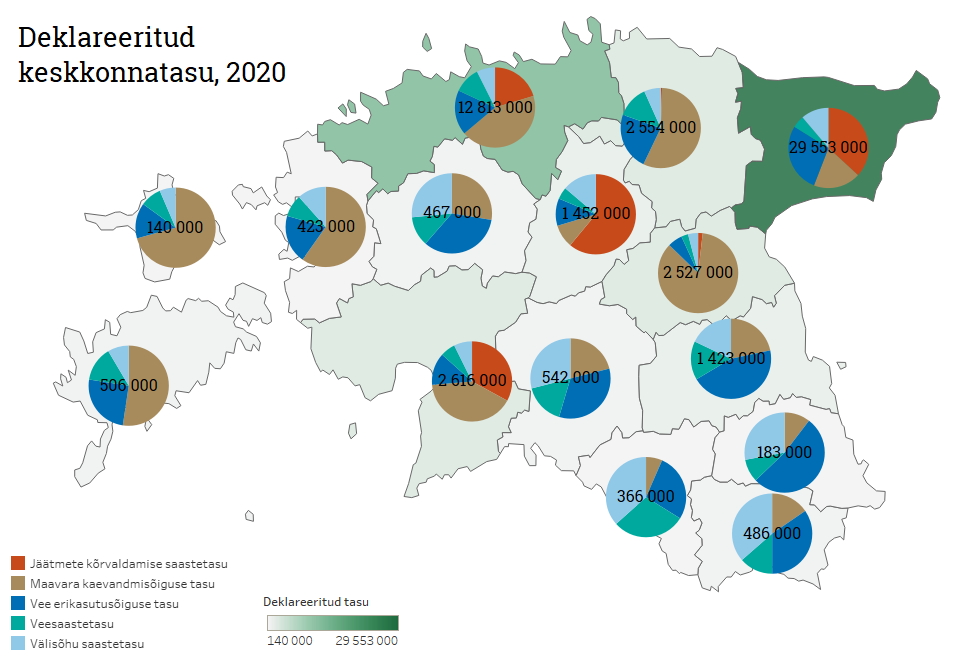
Statistics on declared environmental taxes between the years 2011-2020 can be found here.
The biggest difference between the charges in the last two years stems from natural resource mining rights tax, of which 17.2 million less euros were declared and waste pollution tax, of which 11.8 million less euros were declared. The reason behind this was the temporary reduction in the rates for stratification of oil shale smoke, reduction in the amounts of oil shale mines and consequently the reduction in ash created by the handling of oil shale.
According to Deputy Director General of the Environment Board, Erik Kosenkranius, the reduction stemmed from a smaller demand for fossil fuels during the pandemic. “On the other hand, the climate politics of the European Union also had an important role to play here – generating electricity from oil shale has been restricted, increasing the viability of renewable energy. A smaller demand meant a smaller production volume, which also meant less mining and less environmental tax paid off,” said Kosenkranius.
The largest declared environmental taxes in 2020 were from natural resource mining (17.3 million euros), waste disposal (15.3 million euros) and special use of water (13.4 million euros). Less was declared from air pollution (5.9 million euros) and water pollution (4.1 million euros).
Environmental taxes are applied on the principle of “whoever contaminates, pays”. The goal here is to lessen any potential harm that could be inflicted through the use of natural resources, polluting the environment or disposing of waste. “Expenses that are made to avoid and manage pollution are paid for by everyone who uses the environment. Environmental taxes are then forwarded into environmental projects and into the national and local government budgets,” said Ahto Eesmäe, head of the Environmental Board’s Environmental Tax department. The Environmental Board verifies the data at declaration.
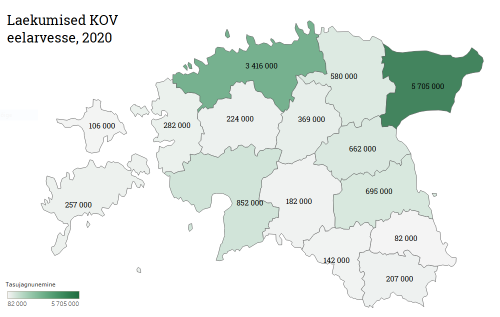
Local government budgets received 9.4 million euros in 2020 for the right to mine natural resources and 4.2 million euros for the special use of water (water collection).
Alutaguse, Saku and Anija parishes received the largest amounts for the right to mine natural resources (2.9 million, 0.9 million and 0.4 million euros respectively). Alutaguse parish, Narva-Jõesuu city and Tallinn received the largest amounts for the special use of water (1.1 million, 0.5 million and 0.2 million euros respectively).
Environmental tax is paid for the right to utilise the environment. Environmental tax is paid by entrepreneurs whose scope or method of activity require an environmental licence.

