
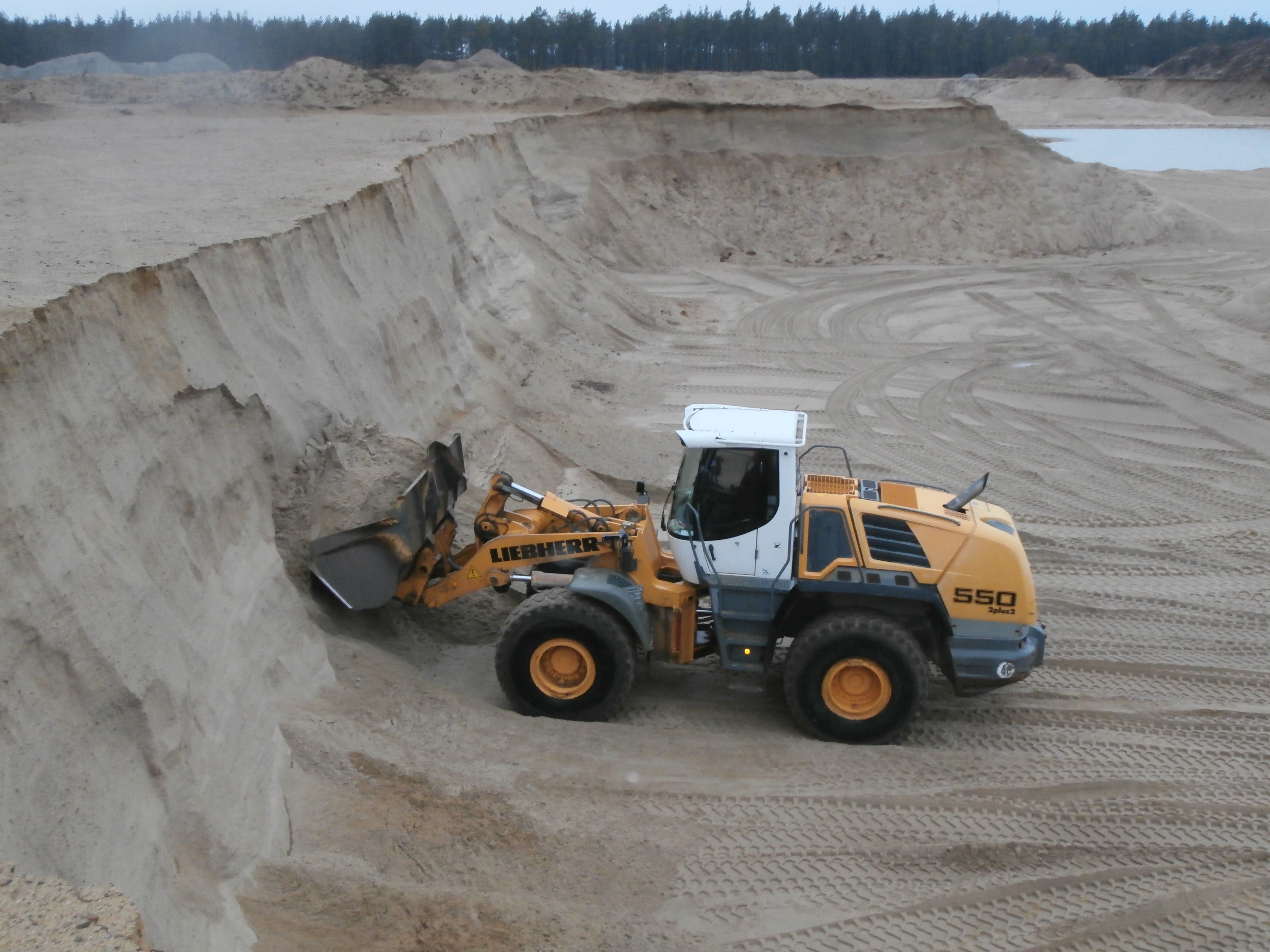
On 1 January 2017, the Earth’s Crust Act entered into force which changes the role of the state in organising the use of earth’s crust; in addition, the proceeding of extraction permits which is from now on being carried out by the Environmental Board becomes faster and is adjusted.
“Before it was the Ministry of the Environment that granted permits in mineral deposits of national importance. As the new Earth’s Crust Act enters into force, the role and competence of the Environmental Board increases in the regulation of the use of mineral resources,” said Maria Karus, Manager of the Earth’s Crust Bureau of the Environmental Board.
The Environmental Board will complete the ongoing proceedings of the Ministry of the Environment. Despite that, the proceedings of the submitted applications will continue rather ordinarily, because most of the regulation is based on the act that was valid before and it does not bring about important additional obligations for the applicants. In order to make the proceeding faster and clearer, it is provided that the term for deciding on the issue of exploration and extraction permits is one year.
Requirements of the content and submission of the applications for extraction permit have also been amended. From now on, information on the entire duration of extraction, the biological and technological reclamation of the area and the expected cost of water regime and reclamation works has to be submitted in the application for extraction permit. A new important amendment is that the owners of the permits have to submit an application for the extension of the validity of the extraction permit at least one year prior to the expiry of the permit.
“Such planning will certainly help the owners of the permit to analyse their activities and expenses better and take the obligation of reclaiming the explored area into account already upon extraction,” explained Karus. In the future, the application will be submitted digitally and one copy on paper, the requirement to submit several copies on paper is no longer valid. In addition, an important amendment is that the Environmental Board will issue all earth’s crust permits digitally in the future which decreases unnecessary bureaucracy.
The act also provides the possibility to join the extraction permits of adjacent mining claims, if desired by the owner of the permit, to decrease duplicating activities (for example, establishing reclamation conditions of the explored area, submission of extraction volume reports, etc.) and to avoid excess time loss.
An important amendment is also made in the regulation of the use of peat areas. “In the future, the extraction of peat is only possible in a disturbed and abandoned peat area or in an area which is entered into the list of peat areas suitable for extraction, therefore, the planning of peat extraction and use has become more thought-through and more targeted,” said Karus. The extraction of peat is still limited by the annual rate of use of peat and the extraction permit is granted by way of open proceeding.
Additional information:
Maria Karus
Manager of the Earth’s Crust Bureau of the Environmental Board
E-mail: maria.karus@keskkonnaamet.ee
Phone: 5668 8438
Notice forwarded by:
Sille Ader
Press representative of the Environmental Board
E-mail: sille.ader@keskkonnaamet.ee
Phone: 5745 0332

