
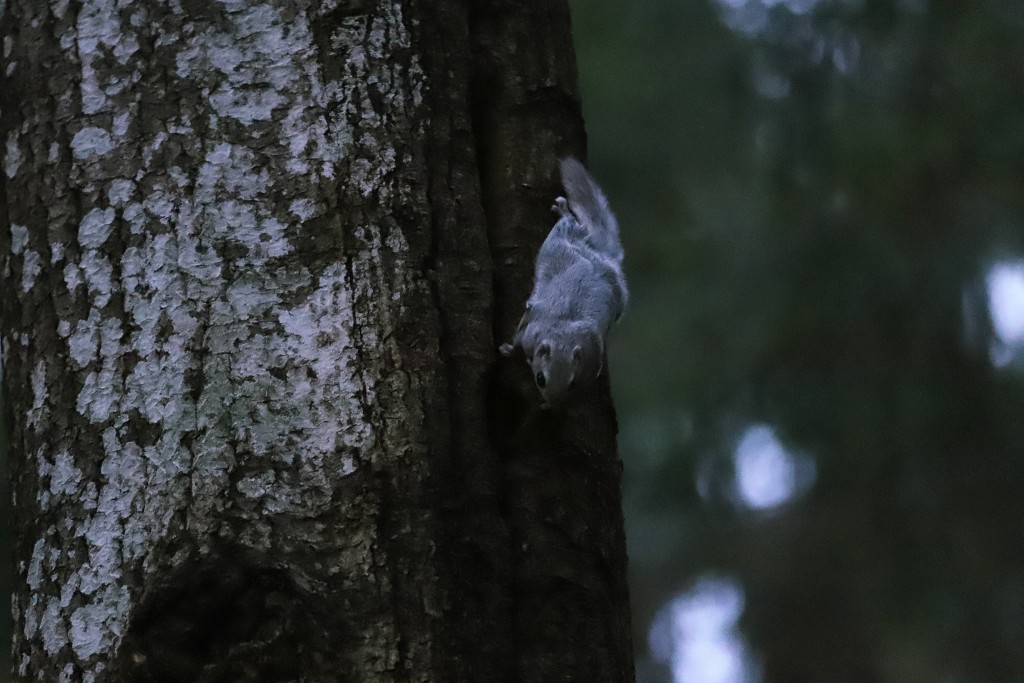
The flying squirrel is a critically endangered protected category I species whose range has decreased significantly in the last century and which still only inhabits the old forests of Viru Counties and northern Jõgeva County. According to the Nature Conservation Act, the protection of all known habitats of species in the protected category I will be ensured by the formation of protected areas. ‘Habitats in good condition are one of the most important prerequisites for the survival of the flying squirrel in our wildlife, which is why those places need to be protected to maintain the nesting forest.
Increasingly effective habitat protection has slowed the decline in the population of the flying squirrel, and together with other conservation measures, a slow increase of population can be expected. The flying squirrel, which has become one of the iconic symbols of nature conservation, has also been awarded the title of Estonia’s animal of the year 2023. That is why I am glad that we can do more for the conservation of this species this year,’ claimed Rainer Vakra, Director General of the Environmental Board, optimistically.
The current network of protected areas and the protection procedure for species protection sites do not guarantee the conservation of the flying squirrel in our natural environment, which is why the Environmental Board started preparing the protection of new species protection sites in 2020. In addition, changes to the protection procedure for species protection sites of the flying squirrel were planned to avoid the negative impacts of logging in the areas formed for the protection of the flying squirrel – the species protection sites.
Letters of participation were sent to all landowners concerned for suggestions, including on how the state could better compensate for the restrictions associated with the creation of species protection sites. A letter of notification was also sent to the relevant local governments. ‘During the participation process, we tried to find compromises that would take into account the interests of both landowners and the flying squirrel. In a number of cases, we found them,’ noted Vakra. The compensation proposals were forwarded to the Ministry of the Environment.
According to the draft, the area of species protection sites of the flying squirrel will be increased by 1,614 ha, of which 651 ha will be designated as a special management zone and 964 ha as a limited management zone. A special management zone is a strict protection zone where economic activities and the use of natural resources are prohibited, as these activities would result in the destruction of the nesting forests of the flying squirrel. The protection procedure for limited management zones is less strict, with the ban of regeneration cutting as a major restriction.
If the regulation is approved, a private forest subsidy of up to €134 per hectare per year can be applied for in special management zones, and up to €60 per hectare per year in limited management zones. At the moment, while the regulation is still in progress, in species protection sites planned in April, land owners can apply for a subsidy of up to €60 per hectare per year through the Environmental Investment Centre.
This week, the Environmental Board submitted an amended draft regulation to the Minister of the Environment for approval.
The range of the flying squirrel is primarily limited by the scarcity and fragmentation of suitable old-growth forests, and clear-cutting in and around the habitats of the flying squirrel is a major threat. It is also important to maintain the connections between habitats – forest corridors between habitats that allow animals to move around and mate. In addition to the network of protected areas, corridors will also be preserved on state land outside the protected areas.
More information on the habitat requirements, threats and planned protection management actions related to the flying squirrel can be found in the action plan for the species conservation, which is available on the website of the Estonian Environmental Board.

