
In May, the pan-European LIFE program supporting environmental and climate projects celebrated its 30th anniversary. At the award ceremony, the European Commission recognized the best LIFE projects, and the grand prix went to the aforementioned Estonian environmental project.
Rainer Vakra, Director General of the Environmental Board, said that the news made him sincerely happy because being selected as the best among thousands of projects is a great recognition of the work of the Board and all those who contributed to the project. "The alvar restoration project was truly spectacular - nearly 600 private landowners participated in the restoration of nearly 2,500 hectares of alvar pasture. During five years, the necessary infrastructures for grazing were built, access roads to the pastures were renovated, awareness work was carried out on the importance of alvars, and information boards introducing alvars were placed in the project areas. In addition, the added value obtained from the alvars land, i.e., the possibilities of upcycling wood, animal meat, and sheep's wool, were discussed together with local animal breeders. In this way, cooperation between entrepreneurs was also promoted so that the work would continue regardless of future subsidies," said Rainer Vakra.
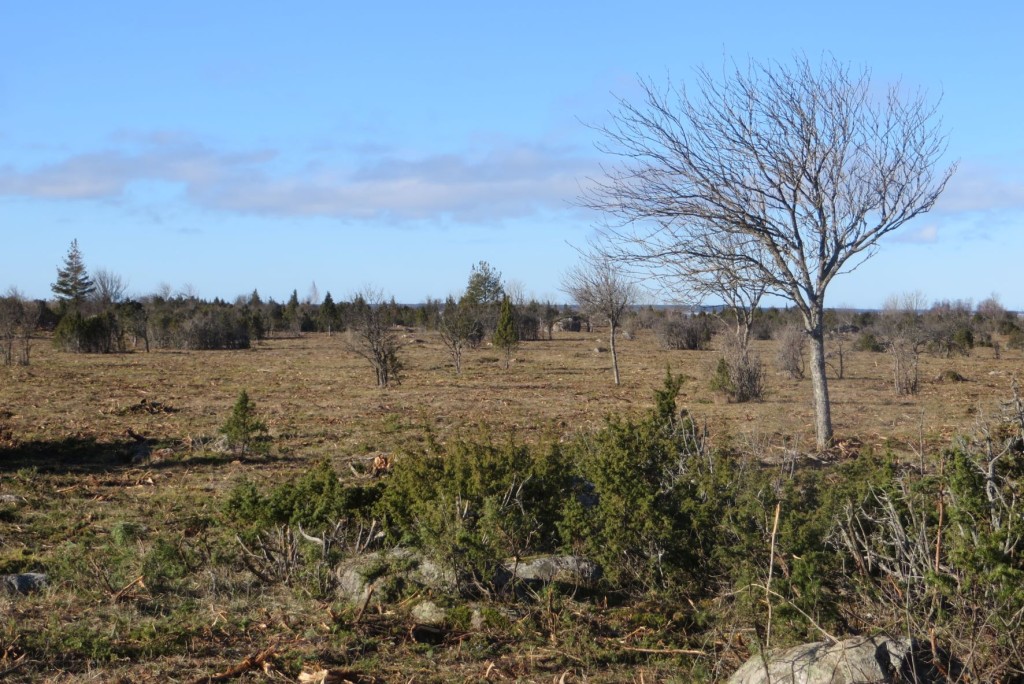
Alvars are seminatural grasslands with thin calcareous soil characteristic of Western Estonia and the islands. However, due to changes in recent decades, these valuable communities have been largely neglected. Alvars have traditionally been village pastures - without grazing, however, they grow densely full of juniper and pine, as a result of which the species richness typical of pastures disappears.
The alvar restoration work consisted of thinning out the dense juniper thickets that had grown on the alvars, cutting out the pines, and establishing paddocks so that animals could graze there again. Calcareous meadows with thin soil are rare all over the world, which is why it is important to protect the communities there. In addition to Estonia, alvars are found only on the big islands of Sweden.
The activities of the alvar pasture restoration project of the Environmental Board took place in 2014-2019. The project budget was 3.7 million euros, of which the European Union contributed 2.8 million euros. The partners of the Environmental Board project were the University of Tartu, the Estonian University of Life Sciences, and the Estonian Seminatural Communities Conservation Association. In addition to more than 600 private land owners, 40 farmers and 20 restoration companies were involved. Most of those who originally joined the venture is still maintaining the restored areas.

