
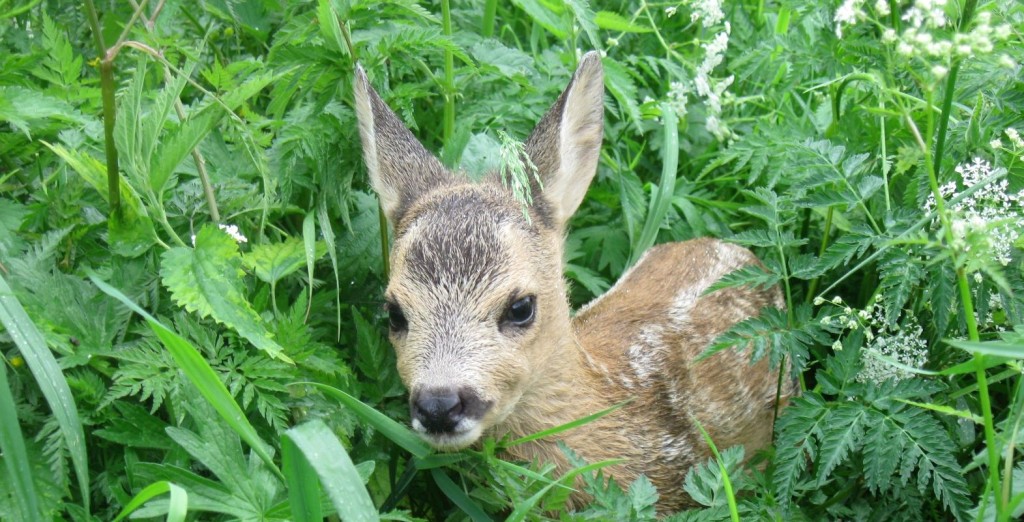
According to Jan Siimson, Chief Specialist of the Office of Hunting and Aquatic Life of the Environmental Board, a person can often come across a baby wild animal in nature, which at first glance, seems abandoned. In most cases, the animal parents are either searching for food or nearby waiting for the person to retreat. "Many animals are not constantly with their offspring and only go to feed the young from time to time. Most of all, you can meet young wild roe deers and hares, which at first glance seem abandoned and helpless. A wild animal does not dare to come to its offspring and cannot feed it if a human being is nearby," Jan Siimson said.
Unfortunately, out of a great desire to help, situations arise where a person interferes in the life of a wild animal for no reason and instead causes it harm. "In the worst case, the baby animal is taken away from its home. This must not be done. Removing a wild animal from its natural habitat is neither permitted nor, as a rule, necessary. This can only be done with the prior permission of the Environmental Board if it is really justified," explained Jan Siimson, chief specialist of the Environmental Board.
Doing things on your own usually does more harm than good to baby wild animals. "If you come face-to-face with a baby animal, the most sensible thing to do is to retreat calmly. A wild animal must not be touched, observed for a longer time, stroked, or picked up, as this would put the future life of the young animals at risk. Staying longer with found baby animals can be dangerous for them because possible predators notice them more easily due to the presence of humans," explained Siimson.
A healthy baby wild animal fares best in its natural environment - it does not need human help and should be left alone. A clearly injured or distressed wild animal can be reported to the National Information Service on 1247. Then, the specialists prepared for this will decide how it is most reasonable to proceed.
Call the national information number 1247 if:
• the parent of the baby animal has died, and the death of the animal has been proven;
• the animal has a visible injury;
• the animal is stuck (e.g., fallen into a hole, stuck in a wire or a fence, etc.) or is outside its natural habitat, and access to its natural habitat is excluded without outside help.
More information about wild animals in distress can be found on the website of the Environmental Board.

