
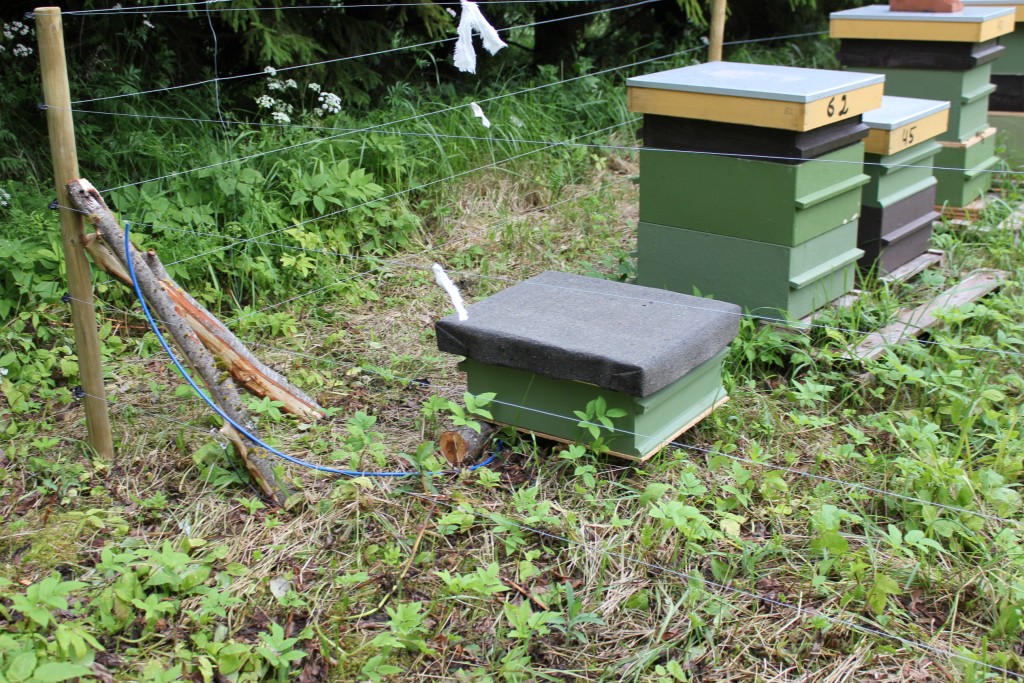
Bears are currently gathering energy for the winter and as such are on the lookout for food. Despite having enough food in their natural habitats, animals tend to act on instinct. This may lead to bears going for beehives or silos, where food is easily accessible.
“Instead of handling the aftermath, we suggest attempting to prevent the problems from occurring in the first place. To keep bears from your hives, we suggest surrounding them with electric fences. This way, they have no easy way to access the honey, and will thus keep away,” says Tõnu Talvi, the head specialist of nature conservation for the Environmental Board.
The Environmental Board will reimburse up to 50% the expenses of such prevention measures. For this, the Board asks beekeepers to submit an application.
The expenses beekeepers suffer as a result of bears has increased greatly in the past ten years. If in 2015, the reported amount of bear-attacks on beehives was 288, then in 2021, the reported amount of attacked beehives is already at 679. Bears have also killed five sheep, one calf and gotten hold of 346 silo rolls in Estonia this year.

Graph: Number of destroyed bee colonies and their beekeepers per year.
| Destroyed beehives | Destroyed silo rolls | |
| Harju County | 67 | 51 |
| Hiiu County | 0 | 0 |
| Ida-Viru County | 9 | 28 |
| Jõgeva County | 20 | 0 |
| Järva County | 88 | 0 |
| Lääne County | 7 | 0 |
| Lääne-Viru County | 59 | 212 |
| Pärnu County | 56 | 0 |
| Põlva County | 78 | 0 |
| Rapla County | 67 | 35 |
| Saare County | 0 | 0 |
| Tartu County | 28 | 0 |
| Valga County | 69 | 9 |
| Viljandi County | 83 | 0 |
| Võru County | 48 | 0 |
| Total in Estonia: | 679 | 346 |
Table: Damages inflicted by bears in 2021 (as of 30.09.21)
“These damages have most likely grown due to the increase in bear population. The amount of beekeepers has grown as well, and with them the awareness of possible compensation for destroyed hives. Beekeepers are eligible for full compensation for hives destroyed by bears. In 2020, the government paid 116,466 euros for damages incurred by beekeepers. The brown bear is spread all over continental Estonia, thus affecting beekeepers all over the country. Beekeepers in Harjumaa, Tartumaa and Viljandi fell prey to bears most frequently in 2020, in 2021 however, the bears prefer Järvamaa, Viljandi and Tartumaa. Damages are incurred where bears and bees are most likely to meet,” says Tõnu Talv, head specialist of nature conservation for the Environmental Board.
Open compost boxes and other various, easily-accessible food scraps are inviting to bears and tend to draw them to human settlements. Apples, pears and other food brought to the edge of the forest for feeding wild animals might also attract bears. It’s important to keep food and food waste from being easily accessible, thus preventing bears from wandering human streets.

