
The Spanish slug and the blackhead slug are wide-spread invasive species in Estonia that eat horticultural produce and crops. This year’s spring has been colder than usual, meaning that the foreign slugs needed longer to become active. The Environmental Board suggest that homeowners gather and destroy both the slugs and their eggs at the beginning of spring to prevent their explosive spread during warmer months.
Guidelines on how to avoid and fend off these foreign slugs can be found on the home page of the Environmental Board.
In cases where a slug has already invaded your garden, a wider spread of the species can be prevented by picking up both mature slugs and their eggs and destroying them in boiling water. “It is important for the entire neighbourhood to cooperate if the invading species are to be prevented from spreading. One slug can produce around 400 offspring who, in turn, will produce just as many. The lack of natural predators can mean that areas without proper slug-prevention can soon be overrun,” said Eike Tammekänd, head of the Environmental Board’s Nature Conservation Works Bureau.
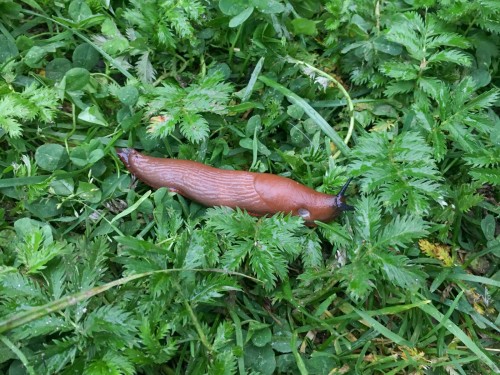 Spanish slug. Photo: Andri Küüts
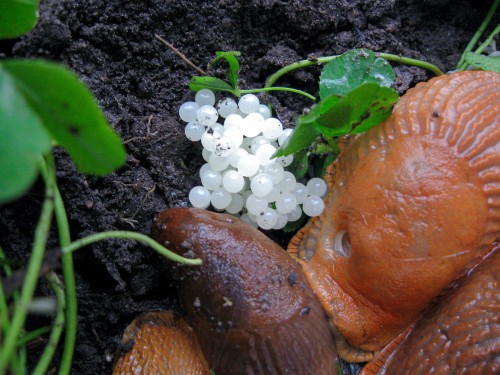 Eggs of the Spanish slug. Photo: Merike Palginõmm
The Environmental Board asks that people not destroy native species in the process. Many native snails benefit gardens by creating humus and acting as vital parts of the food chain. They also eat the eggs of the foreign slugs.
The Spanish slug has been spreading through Estonia for the past ten years. The blackhead slug, its Latin name being Krynickillus melanociphalus, has reached Estonian gardens in the last few years and is currently most commonly found in Harju county, Saare county and Viljandi county.
The Environmental Board wishes to confirm an action plan in the summer of 2021 for controlling the slug population by compiling international experiences and practical recommendations for avoiding and culling invading species both in private gardens and on a larger scale.
Invading species are species that have appeared outside of their natural environment through intentional or unintentional human activity. Invading slug species spread mainly through an invigorated plant trade. Slugs end up in gardens through eggs that have remained in planting soil or in the soil that potted plants come in. The spread of slugs is helped by a moist and warm spring and summer period and mild winters.
How to avoid slugs getting into your garden?
- Refrain from bringing plants into your garden from areas with wide-spread slug infestations.
- Check the soil that your plants arrive in and destroy any eggs in boiling water.
- After buying plants keep them in quarantine for a few weeks. Place a plastic bag around the root system of your plant, so that the soil it came in would also remain in the bag and tie it shut around the stem. Check the bag from time to time for slugs. Depending on the plant, keep it in a semi-shaded area, water it and keep it under observation. Destroy any slugs that appear with boiling water.
What to do when the slugs have already made it into the garden?
- Begin the culling process in early spring, before the first grown specimens awaken. The most efficient way to get rid of the slugs is to collect both the slugs and their eggs and destroy them by pouring boiling water over them. Dig the destroyed slugs deep into the ground or throw them into a dumpster.
- Regularly check shady and moist areas in your garden that are not easily dried by warm air and sunlight. Clean any leaf piles, move your compost pile and, if possible, trim the underbrush of your lush plants and shrubbery. The edges of your greenhouse, underneath your terrace, by your well, etc — these are some of the best places for the slugs to live and reproduce.
- The slugs can be baited with straw, watermelon rinds and other juicy vegetables. Place wooden boards near your bait so that the slugs can hide underneath, making them easy to gather and destroy.
- It’s important to cooperate with your neighbours in these processes. Otherwise it will be impossible to be rid of the slugs throughout the neighbourhood and they will keep repopulating the gardens.
- Do not simply relocate the slugs! This only serves to move the invading species somewhere else. By leaving the slugs somewhere else, they can continue reproducing, eventually making it back into gardens.
- Avoid using limacide. It is not very effective in deterring the Spanish slug and poison native species instead. Limacide also endangers species that eat snails (such as hedgehogs) and pets (cats and dogs).
