
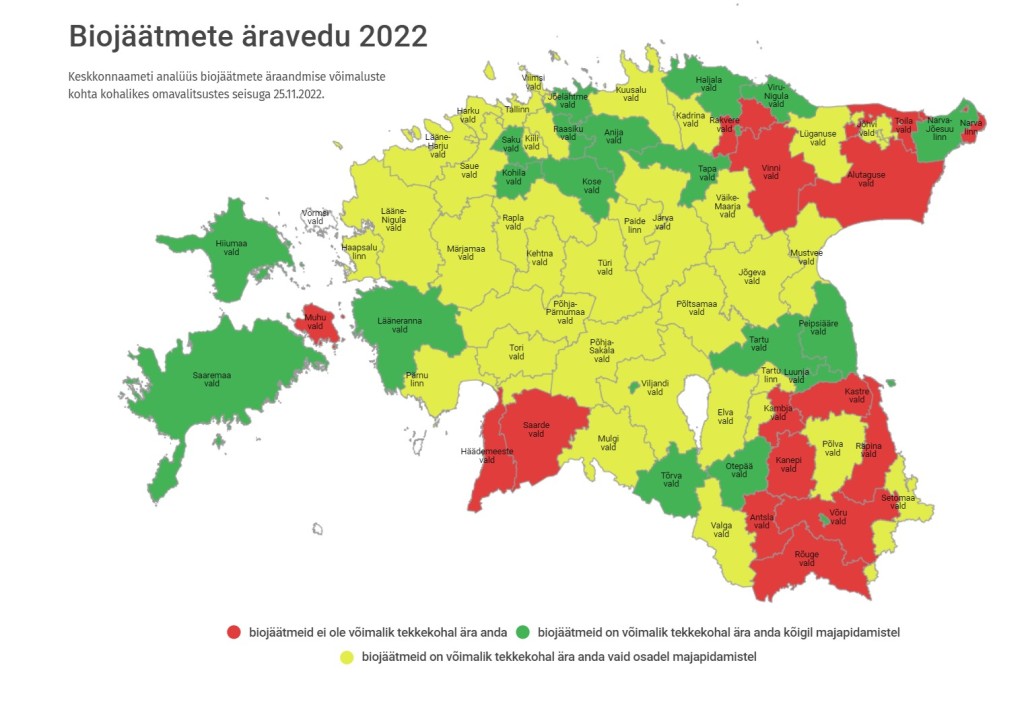
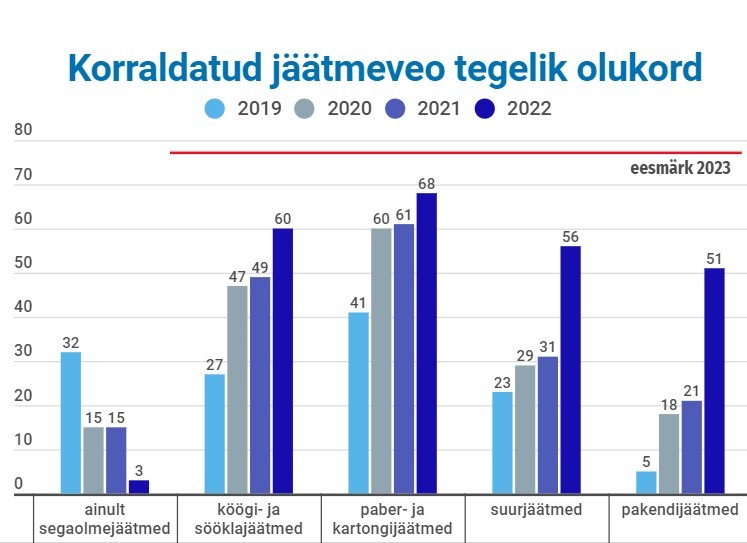
‘By 2025 at the latest, we must recycle at least 55% of the waste generated in households. Separate collection of waste is a prerequisite for achieving this objective. As long as there is not enough clean material, there cannot be a business model that recycles it,’ said Rainer Vakra, the Director General of the Estonian Environmental Board. ‘Over the year, the ice has started to move. There has been a noticeable increase in the number of local governments that also organise the collection of packaging waste, large waste, paper and cardboard and kitchen and canteen waste,’ Vakra noted.
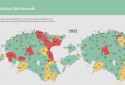
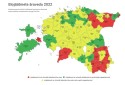
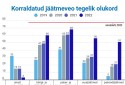
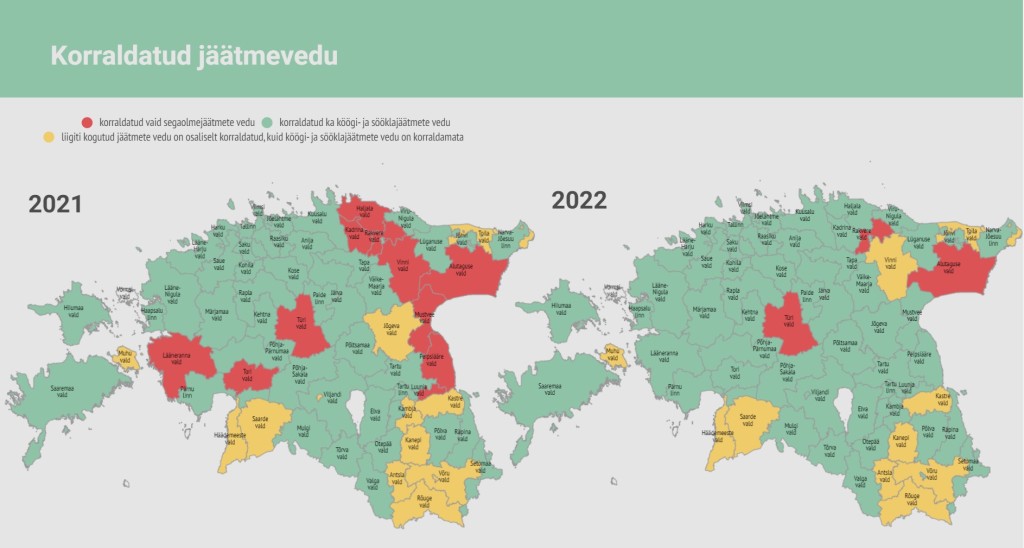
The review by the Environmental Board shows that the possibilities for the separate collection of waste generated by residents have improved dramatically over the year. While in the previous two years there were 15 municipalities where it was possible to dispose of only mixed municipal waste as part of an organised waste collection service, now there are only three.
Reet Siilaberg, the Head of the Department of Circular Economy at the Environmental Board, says the 55% recycling target would be within reach if we stopped throwing food waste into mixed municipal waste bins. ‘Biodegradable waste fills a third of our mixed municipal waste containers. If we would collect it separately, the amount of waste going to landfill would be drastically reduced and we would reach our recycling target,’ explained Siilaberg.
In 2021, only 30.4% of municipal waste generated by households was recycled in Estonia. The main reason for this is that materials suitable for recycling are thrown in the municipal waste containers, which significantly reduces or even eliminates the possibility to recycle them. Around 100,000 tonnes of biodegradable waste is thrown in the municipal waste containers every year, much of which ends up in landfills after treatment.
‘Disposal of bio-waste in landfills is particularly damaging to the environment. The bio-waste in landfills produces greenhouse gases under anaerobic conditions. At the same time, we will be deprived of material that could have been used to produce biogas or compost. Thirdly, bio-waste thrown in with the mixed municipal waste will smear the entire mass of waste, thus making it impossible to recycle other materials,’ stated the Head of the Department of Circular Economy at the Environmental Board.
‘The most environmentally friendly option is to produce biogas from bio-waste or to compost and recycle bio-waste on site, but this option is not suitable for all households. Therefore, by the end of next year at the latest, all households must also be able to subscribe to the bio-waste collection service. Anyone who wants to can compost it on site,’ explained Reet Siilaberg.
One local government that has made strong improvements in waste management over the year is Lääneranna. ‘Over the year, many local governments have made significant changes. It is welcomed that many local governments are not only taking their legal obligation to organise waste collection seriously, but are also making a real effort to encourage residents to become more involved in sorting their waste. For example, Lääneranna municipality has been creative and influential in informing and guiding their residents,’ said Reet Siilaberg, praising Lääneranna.
According to Piret Mäestu, a supervisory official in the Economic Department of the Lääneranna local government, their experience shows that separate collection of waste can be organised even in a small municipality. ‘We have just over 5,000 residents, and with the organised waste collection, they can dispose of 7 different types of waste, and the cost was not that high, especially when sorting all the waste properly,’ claimed Piret Mäestu.
In Lääneranna municipality, in addition to mixed municipal waste, it is also possible to dispose of separately collected paper and cardboard waste, mixed packaging, glass packaging, bio-waste, large waste and electronics at home using organised waste collection. ‘There are those who are critical of the new system, but many have been looking forward to the opportunity to give away separately collected waste. There are those who have called us and thanked us profusely for this opportunity,’ said Mäestu. The opportunities to dispose of large waste and electronics have been particularly well received by the residents of Lääneranna.
Under the Waste Act, all people and businesses are obliged to separately collect waste. Local governments with more than 1,500 residents must organise the collection of mixed municipal waste and, where appropriate, separately collected waste on their territory. By the end of 2023 at the latest, all households in all municipalities must be able to transfer bio-waste to a waste collector or compost it on site.

