
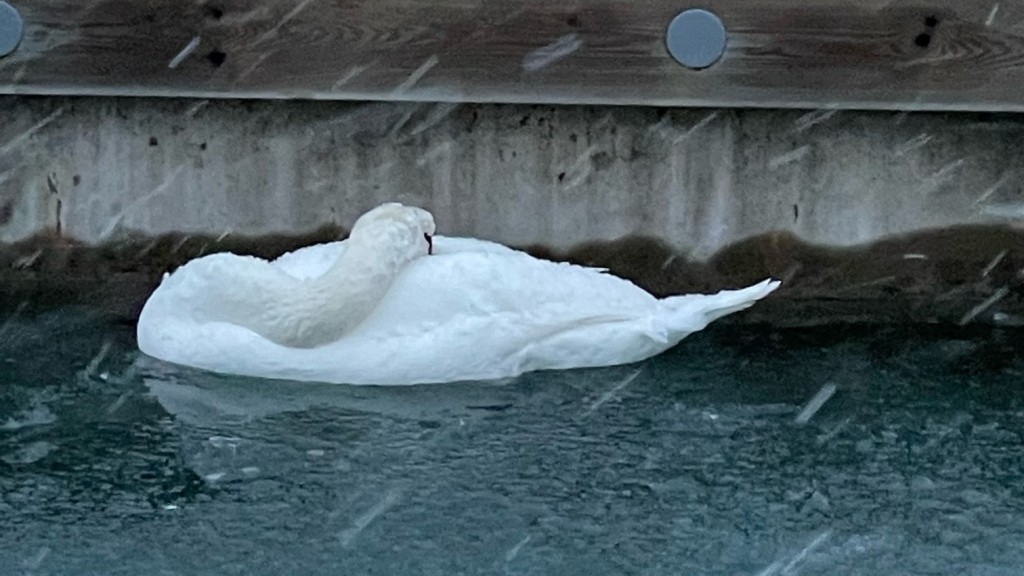
Healthy and viable waterfowl do not freeze. Their thick and waterproof plumage and special blood supply to their feet keep them from freezing. "This is how waterfowl can be motionless on the ice or in the water for hours. For example, the mute swan, which has supported its neck on its back feathers, is in a completely natural resting position. This does not mean that he is in trouble or frozen," said Jan Siimson, chief specialist of the Hunting and Aquatic Life Bureau of the Environmental Board.
These days, however, the Environmental Board has received many reports from anxious citizens who suspect that waterfowl are, in fact, frozen. The chief specialist of the Environmental Board confirms that in most cases, they are not frozen or in trouble.
Freezing of waterfowl is a very rare phenomenon. "It can only happen in case of a simultaneous occurrence of several rare and unlucky factors. For example, when a bird is really injured, and the air temperature drops sharply below zero. Such cases occur very rarely," says Jan Siimson.
The best help a person can do for waterfowl in the winter is to keep away from them and leave them in peace. However, if you are convinced that the bird is injured and in trouble, report it to the state information telephone 1247.
The Environmental Board also reminds you that waterfowl do not need extra food - they get their own food from water bodies. Food provided by humans can be harmful to the waterfowl's health or even cause premature death.
Additional information:
Jan Siimson
Chief Specialist of the Hunting and Aquatic Life Bureau of the Environmental Board
jan.siimson@keskkonnaamet.ee
5346 0774

