
According to Rainer Vakra, Director General of the Environmental Board, the large carnivore protection and management plan now define a minimum population limit for wolves, lynxes, and bears, below which the number of animals must not fall. "During the preparation of the plan, a balance was sought in cooperation with stakeholders so that large carnivores would continue to be a natural part of our nature, carnivore damage to animal keepers would be tolerable, and society would not have an increase of unreasonable fear of these dignified animals needed in the nature," said Rainer Vakra.
In addition to the carrying capacity of the environment, these thresholds take into account the share of large carnivore populations in Estonia from the Baltic region and the tolerance limit of society. "Thus, the number of large carnivores should remain within favorable and such limits that the number of possible carnivore damage and contact with people does not exceed a reasonable limit," explained Jaanus Remm, one of the compilers of the management plan.
"Compared to the previous plan, it was agreed that the minimum number of litters of a bear with cubs should be 70 instead of 60 each year. In the case of a wolf, the earlier threshold of 15-25 wolf herds with puppies increases to 20-30 herds. In the case of a lynx, the minimum number of litters was adjusted to 80 litters instead of the previous 100–120 litters," said Margo Tannik, chief specialist of hunting of the Environmental Board.
In addition to the above, future decisions of the Environmental Board in organizing hunting shall be based on the rates of damage, the reproduction of species, and other similar conditions. It was agreed that although the threshold for the lynx, whose number had been in decline for almost a dozen years, was set to 80 litters, the resumption of lynx hunting in Estonia would not be discussed until at least 100 litters are known here.
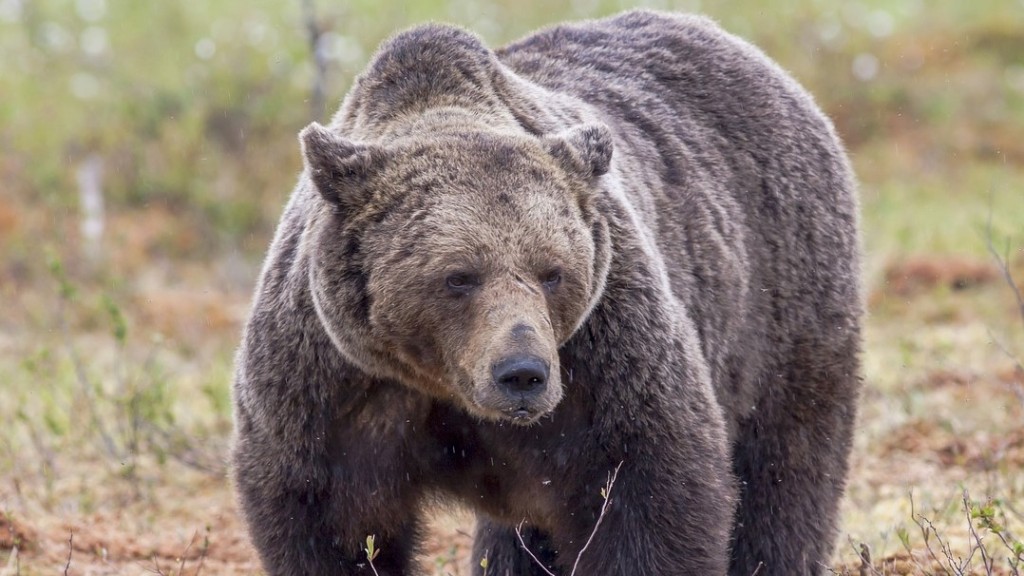
The population of brown bears is in a very good state in Estonia - it is estimated that there are currently almost 950 bears living in Estonia, i.e., more than 100 litters are born every year. In recent years, the damage caused by bears to beehives and silage bales has also increased significantly. In order to control the damage, limiting the number of brown bears will continue. In order to prevent the development of nuisance species, people must continue to protect their property, such as beehives and silage bales, properly.
The wolves are doing well too. In order to achieve a more favorable status, the plan provides for the creation of areas where stable wild wolf herds could develop. Such herds are not expected to cause as much damage to livestock keepers as nuisance species and will effectively play their important ecological role in the wild.
Unfortunately, the lynx has done the worst of these species. Even after a six-year ban on hunting and the recovery of the main prey, the roe deer, the lynx population has not reached a good level. One of the reasons why a large part of the lynx's offspring dies needs to be studied in the near future.
The plan provides a comprehensive overview of species abundance, biology, hunting, damage, and prevention. The new plan emphasizes the need for more in-depth research and the introduction of innovative monitoring methodologies, regulatory adjustments, improved damage prevention and compensation, and better awareness among all parties. The parties have a common desire for cooperation between stakeholders to take place on an ongoing basis. To this end, the Environmental Board plans to establish a body of cooperation for large carnivores.
The plan approved for 2022–2031 is available on the website of the Environmental Board. The draft plan for the protection and management of large carnivores was prepared by OÜ Rewild on the commission of the Environmental Board.
Additional information:
Jaanus Remm
Compiler of the draft action plan for large carnivores, OÜ Rewild
5620 1082
Margo Tannik
Chief Specialist of the Hunting and Aquatic Life Bureau of the Environmental Board
margo.tannik@keskkonnaamet.ee
516 0148

